
Part 2: When Your Learning Hub Goes Viral (Before Social Media Was Even Involved)
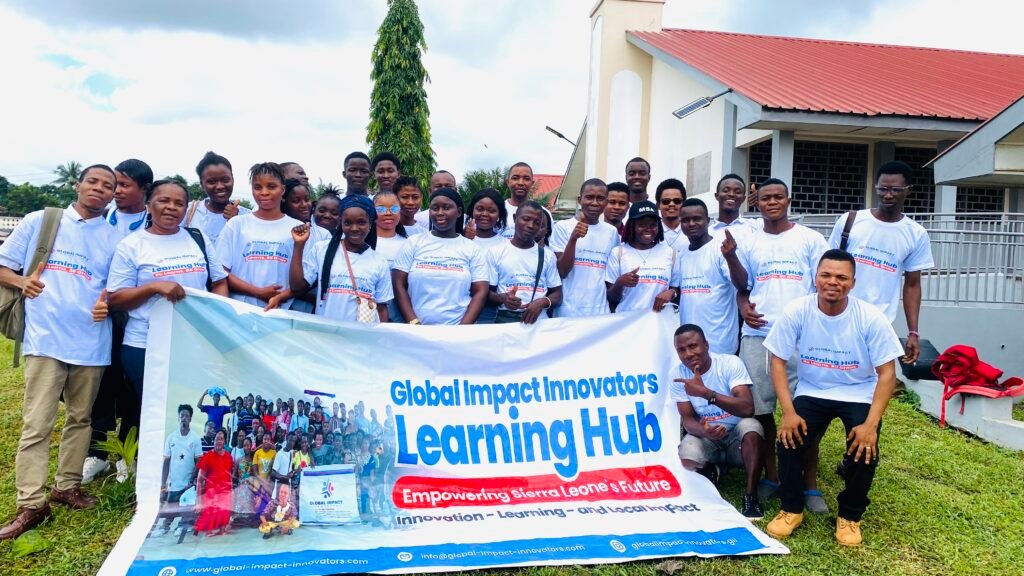
The Launch That Floored Us
When we announced our first learning hub, we thought, “This is great, we’ll probably fill our 40 spots without too much trouble.”
Wrong. Incredibly wrong.
121 applications for 40 spots
That’s three people fighting for every seat. We went from worrying about enrollment to running Harvard-level admissions for AI and agricultural technology training in Sierra Leone.
Each application wasn’t just a form—it was a story. Agricultural entrepreneurs wanting to learn AI for crop prediction. Women looking to scale through digital marketing. Young farmers eager for modern agricultural technology. Recent graduates realizing traditional education had left massive gaps in practical skills.
People saw this as their shot at opportunities they’d never imagined.
The Hardest Decision We Never Expected
Try narrowing 121 passionate, brilliant people to 40 spots. It’s basically impossible.
We conducted comprehensive interviews and settled on three criteria to identify our founding ambassadors:
- Hunger for growth – How badly did they want to learn advanced concepts?
- Community impact potential – Could they share knowledge and lift others up?
- Innovation drive – Were they ready to use AI and technology to transform farming?
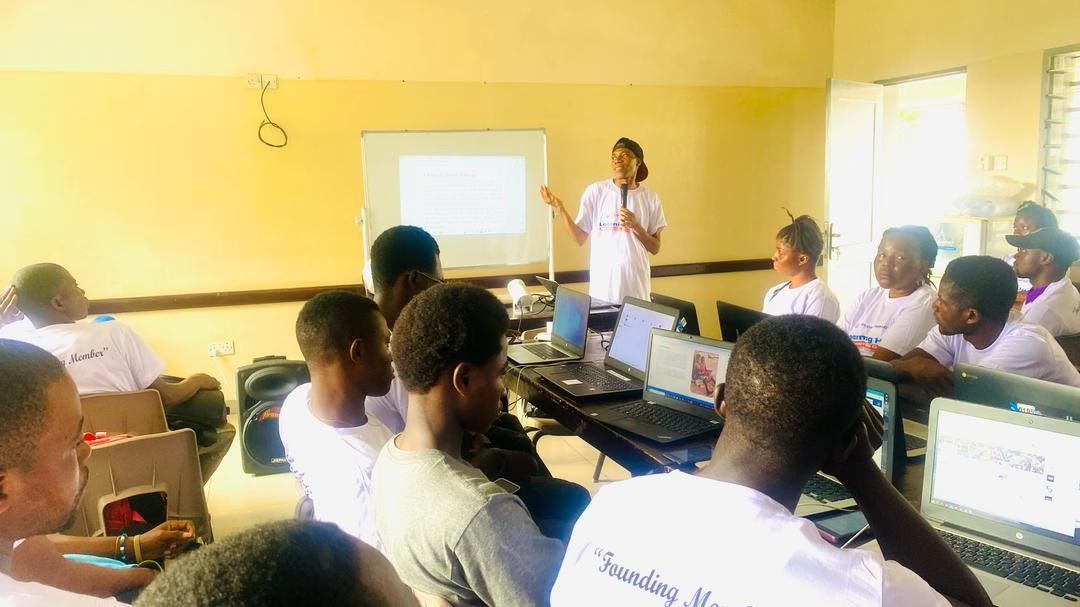
The 40 people we selected didn’t just become students—they became founding ambassadors. And they took that responsibility seriously.
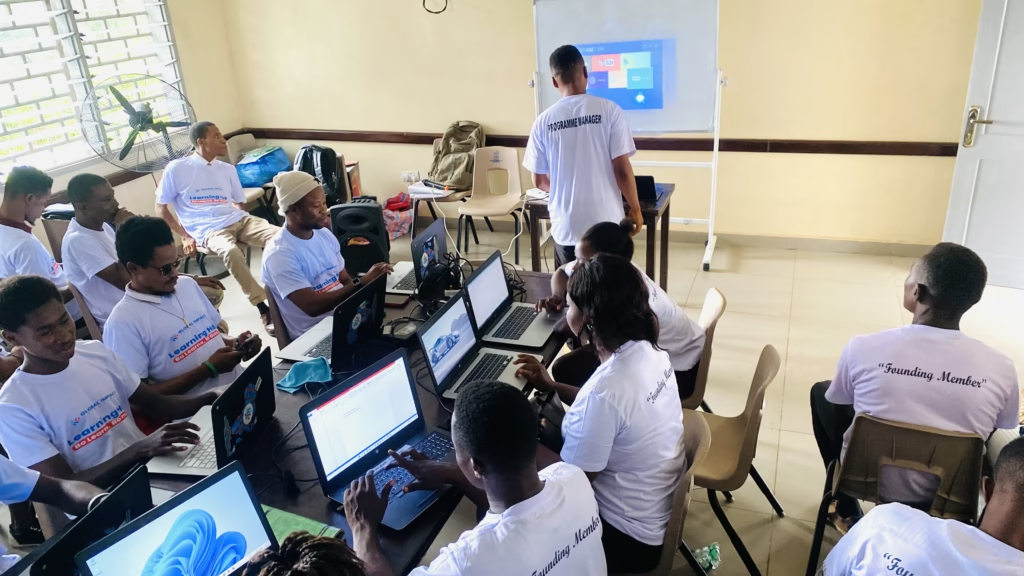
The Beautiful Chaos of Our Student Body
Our first cohort represented Sierra Leone’s entire spectrum of technology relationships.
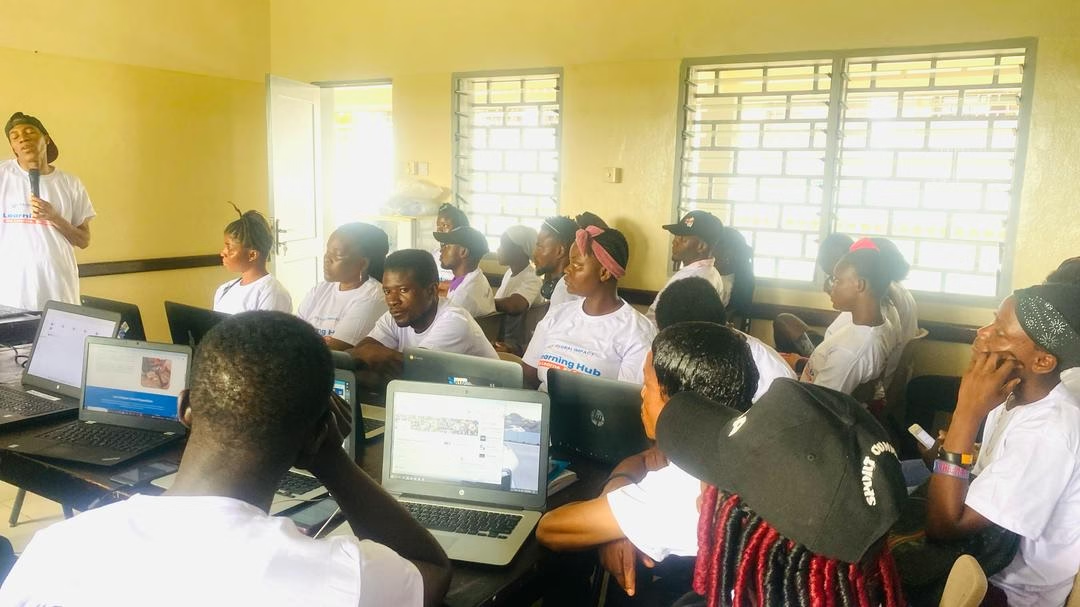
We had people who had never used a mouse sitting next to those who could navigate basic functions. Complete beginners learning alongside folks ready for AI applications but lacking access to advanced training.
Watching someone use a computer mouse for the first time, seeing their face light up when they realize they control the screen, then watching them learn to type, create their first Word document, make their first PowerPoint presentation—and eventually, weeks later, discussing how AI could optimize their crop yields? That’s a transformation that restores faith in human potential.
The progression was incredible: from “What’s a mouse?” to creating business presentations to exploring advanced agricultural applications, all in a matter of weeks.
Our Training Model
We threw ourselves into this program like it was the most important thing we’d ever done.
The Core Program:
- Tuesday, Thursday, Friday sessions (3 hours each)
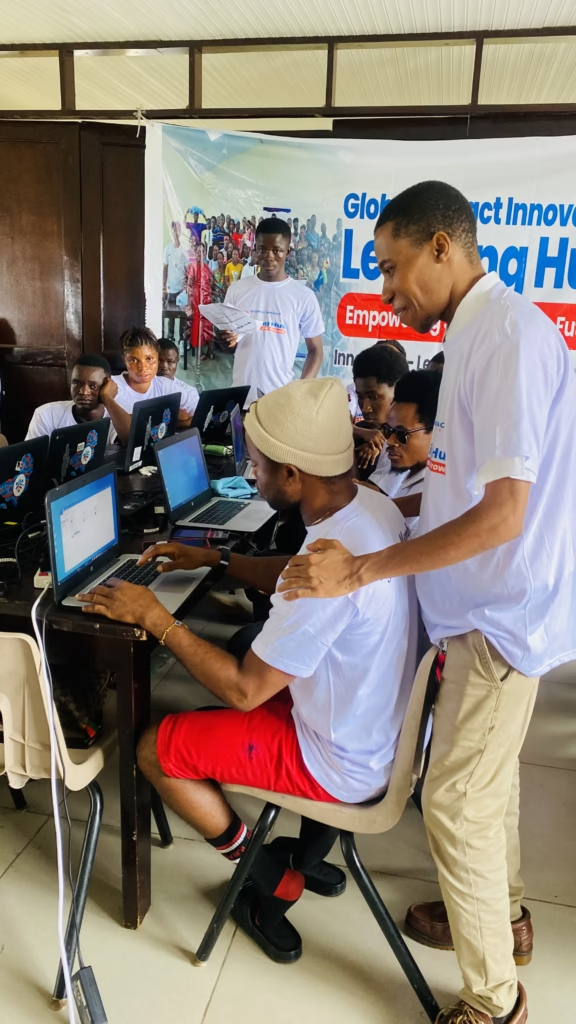
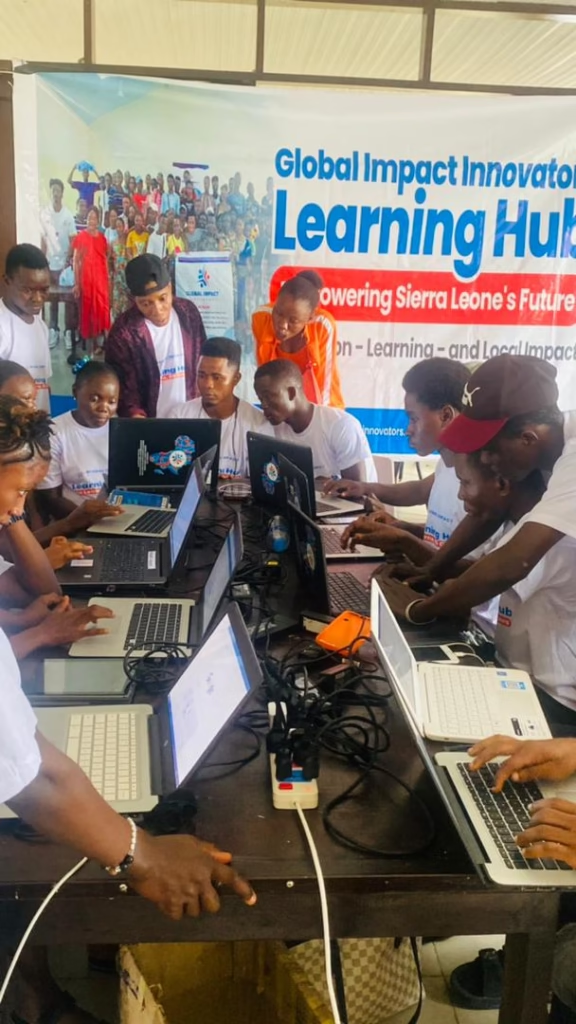
- Foundation level: Basic computer skills, Microsoft Office training, internet basics
- Intermediate level: Business applications, presentations, digital communication
- Advanced level: AI applications, modern agricultural technology, sophisticated business concepts
- Progressive curriculum meeting students at their current level and building systematically
Saturday Community Days:
- Open doors to everyone
- Free computer access
- Community exploration and basic training
But we’re not stopping at basic training.
Future Plans That Keep Us Excited
We’ve got ambitious plans brewing:
- Microsoft and Google partnerships for actual certification programs
- Pre-recorded Saturday classes for structured AI basics and agricultural applications
- Satellite classroom technology – live classes from global experts via projector technology
Imagine young entrepreneurs in Bo taking AI for agriculture classes from Silicon Valley experts, learning advanced business concepts from London instructors—bringing the world’s specialized classrooms to Sierra Leone’s doorstep.
When Everything Went Sideways (Again)
Three weeks after opening, we thought we had everything under control. Forty dedicated students, Saturday community programs, neat plans for specialized training.
Then the phone started ringing.
Schools. Everywhere. All wanting partnerships.
First three schools. Then five. Then suddenly, 20 schools had officially requested partnerships—with dozens more calling daily, saying, “We heard about Bo, and we desperately need this for our students too.”
This wasn’t in our business plan. This was pure, organic demand revealing a massive gap in Sierra Leone’s education system.
When Life Gives You More Success Than Planned
These schools had been struggling to provide even basic computer training for their students. In Sierra Leone’s educational system, fundamental computer literacy—things like using Microsoft Office, creating presentations, basic internet skills—isn’t just limited, it’s practically nonexistent in many areas. Advanced topics like AI applications come later; first, students need to know how to turn on a computer and create a document.
Suddenly, there we were, offering exactly what they’d been desperately seeking: a pathway from basic computer literacy all the way up to advanced technological applications.
We did what any reasonable organization would do: we adapted. Fast.
Our Scaling Strategy
September 2024 became our “Let’s See How Much We Can Handle” month.
School Partnerships:
- 4 schools as inaugural institutional partners
- 16 schools on priority waiting list for batch two
- Strategic scheduling: Schools A & B get Monday/Tuesday, Schools C & D get Wednesday/Thursday
The 16 schools on our waiting list aren’t forgotten. We’re sending materials, staying connected, keeping them warm until we can provide full specialized training.
This expansion happened because schools were literally begging for it—phone calls starting with, “Please, our students need basic computer training. They don’t know how to use Microsoft Word, they can’t create presentations, they’ve never sent an email. We need to start with the fundamentals.”
The Numbers That Make Us Double-Take
Three weeks in, our “let’s see how this works” experiment produced:
- 40 founding members showing up like their futures depend on it
- 121 people wanting in from day one
- 20 schools officially requesting partnerships
- Dozens more schools calling daily
- Hundreds of community members attending Saturdays
- Regional buzz with people discussing Bo’s “learning hub” from villages we’ve never visited
From Learning Center to Accidental Movement
When you create something addressing a genuine educational gap, word spreads faster than small-town gossip.
The Bo Learning Center proved what we suspected:
- Demand for specialized training is massive – way beyond any market research prediction
- Young people are ready for advanced concepts – give them AI and agricultural tech training, they don’t just learn, they innovate
- Schools desperately need partnerships – they know students need these skills but haven’t had anywhere to turn
- Community-centered hubs work – building with the community instead of just for them creates magic
What We’ve Really Started
Here’s what keeps me up at night (in the best way): the Bo Learning Center proves that sometimes the most powerful changes happen when you stop overthinking and start responding to real need.
We came with a plan for basic entrepreneurship training. Sierra Leone handed us something better—a real-time lesson in what happens when you provide the digital foundation people actually need: starting with basic computer literacy, building up through Microsoft Office and presentation skills, and eventually reaching advanced applications that can transform operations.
Our founding members started with learning how to use a mouse and are now creating professional presentations and beginning to explore AI applications for agriculture. The schools lining up aren’t just seeking advanced training—they’re joining a movement that recognizes education must start with digital fundamentals before building to an AI and technology-driven future.
What’s Next: The Ride Is Just Getting Started
The Bo Learning Center evolved from “interesting pilot project” to “we might have cracked the code for specialized youth empowerment in Africa” faster than we imagined.
As we add four schools in September, watch our waiting list grow, and see founding members transform from technology beginners to AI-savvy agricultural entrepreneurs, one thing is crystal clear:
We didn’t just start our first learning center. We accidentally identified and began filling a massive gap in specialized education across Sierra Leone.
The Legacy Still Being Written
The Bo Learning Center proved that when you give young people access to proper digital foundation training—starting with basic computer skills, Microsoft Office, and presentation abilities, then building up to cutting-edge AI and agricultural technology—they don’t just learn, they start planning to transform their entire communities.
As news spreads beyond Bo, beyond Sierra Leone, we’re not just watching our first hub grow—we’re witnessing the birth of a new model for preparing young Africans for the future of agriculture and entrepreneurship.
That three-month training program started something way bigger than we imagined. After seeing what happened in Bo, we’re convinced this specialized training model can work anywhere in Africa.
The future of innovation in Africa might just be getting started.
Want to be part of what’s next? Global Impact Innovators is scaling our learning hub model across Africa. We’re looking for partners who believe young people can revolutionize agriculture and entrepreneurship when given proper digital foundation training—from basic computer literacy and Microsoft Office skills up to advanced AI and agricultural technology applications.
Check us out at www.global-impact-innovators.com and let’s build the future of African agricultural innovation together.
Because honestly, after Bo, we’re convinced this model can work anywhere there are young people ready to embrace the future.

One Response
The Hub is already showing its value beyond the original idea. The fact that over a hundred people applied for just forty spots, and schools are lining up to be part of it, says so much about how needed this is in Bo.
I also love that it’s not only about tech skills but about creating a place where people feel they belong and can keep coming back, whether it’s for training, teaching, or just being part of something bigger. That’s what will make the Hub last.
Excited to see teacher enablement and certification become the flywheel for scale!