
GII Bootcamp at Kikubi Girls Secondary School
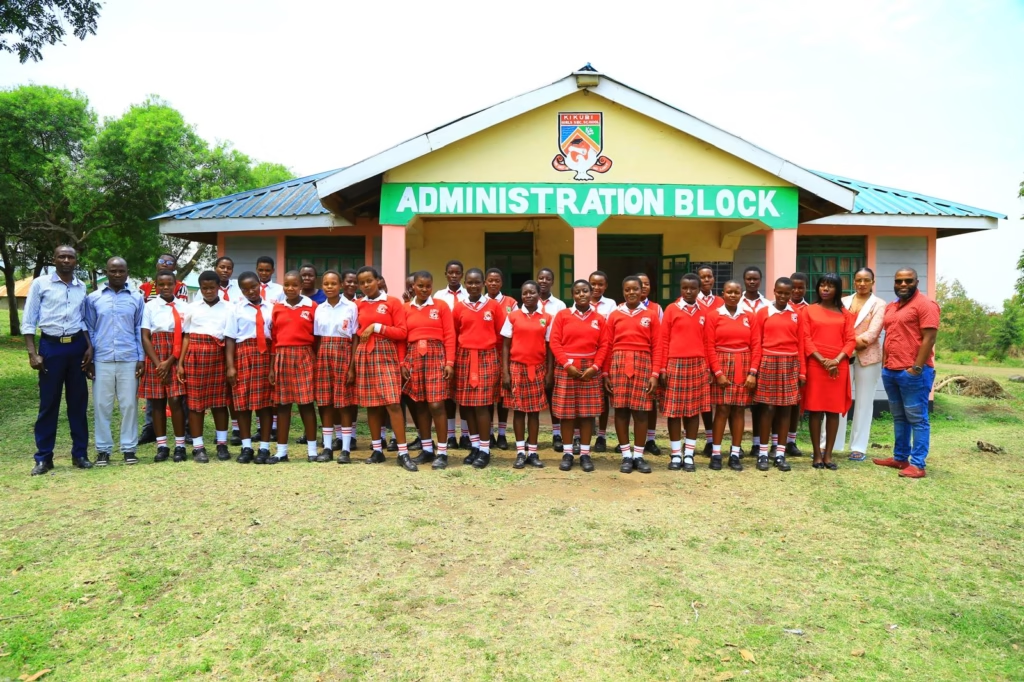
Earlier this month, we spent two unforgettable days at Kikubi Girls Secondary School in Homa Bay County, Kenya. For Global Impact Innovators (GII), this wasn’t just another bootcamp—it was a chance to sit with young women in a rural village by Lake Victoria and talk about what technology could mean for their futures.
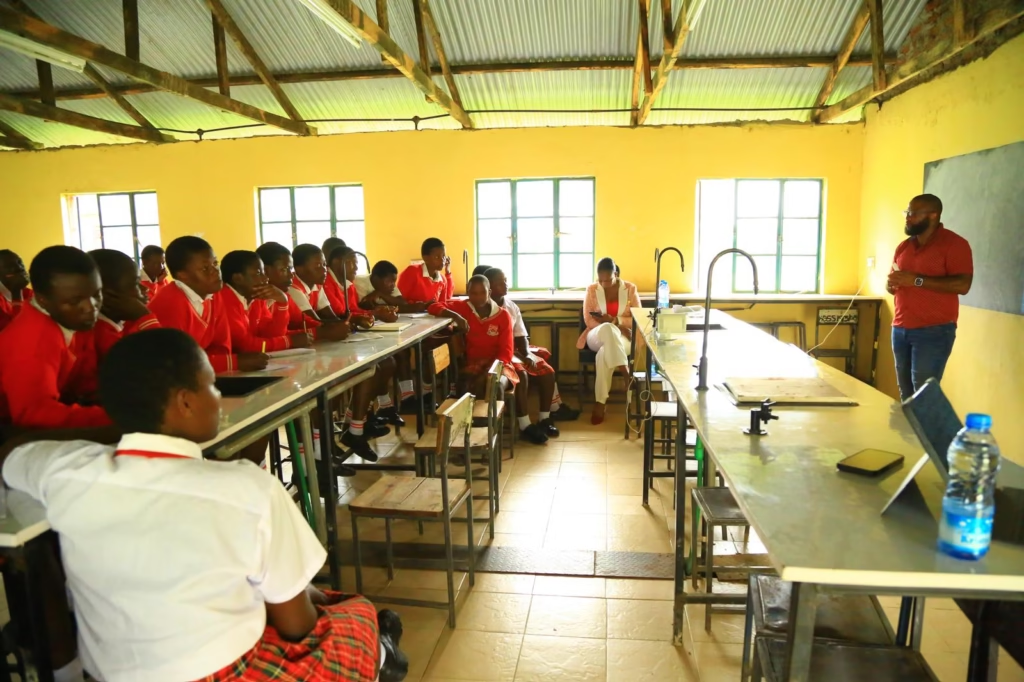
When I walked into the school compound, I was struck by how small the group was—only 40 students are currently enrolled in the school. But the energy they carried made the classroom feel full. Notebooks were open, pens ready, eyes focused. From the very first session, they weren’t just listening—they were taking notes, asking questions, and connecting what we shared with their own lives.
Why Technology Matters Here
We began with the basics: what is technology, and why does it matter? Together, we looked at examples they knew well—mobile money for payments, drip irrigation in farming, digital lessons in classrooms, and healthcare tools like vaccines and X-rays.
The message was simple: technology is not just about gadgets—it is the language of opportunity. It is the key to accessing jobs, creating businesses, and lifting communities. For young women in villages like Kikubi, taking technology seriously today is the best way to open doors tomorrow.
Inside the Bootcamp
Over the course of two days, the sessions unfolded step by step:
- Understanding how technology touches daily life.
- Exploring why digital skills matter for education and careers.
- Discussing future jobs that will require coding, financial literacy, entrepreneurship, and even AI skills.
- Encouraging the students to see that their future starts with the choices they make today.
The girls came ready. They filled their notebooks, leaned into discussions, and asked questions that showed real depth: “If I learn coding, where do I start?” … “How can technology help farmers like my parents?” … “Can I build something that helps my village?”
These weren’t questions of curiosity alone—they were questions of ambition. They revealed how these girls are already thinking about solving problems not just for themselves, but for their communities.
Challenges & Resilience
Behind the enthusiasm lies a harder truth. Mrs. Barasa, the Deputy Head Principal, told us that public funding for the school has steadily declined, placing enormous strain on the administration. What should be provided through government allocations often arrives late, in smaller amounts, or not at all.
This leaves the school constantly operating on the edge. To keep things going, teachers sometimes dip into their own pockets—buying chalk, pens, or even helping students with meals or exam fees. Their commitment keeps the doors open, but it comes at a personal cost.
Alongside the funding struggles, many parents cannot afford tuition, and some girls face distractions and pressures from the surrounding community. Others drop out because they see no clear opportunities after graduation.
And yet, what we saw at Kikubi was not despair—it was resilience. The teachers continue to fight for their students, and the girls continue to show up prepared, determined, and eager to learn. Their strength is what keeps hope alive in this school.
“We are fighting every day to keep these girls in school. But without opportunities, many of them don’t see the point. That’s why what you’ve shared here—the message of skills and possibility—means so much. It gives them a reason to stay.”
– Mrs. Barasa, Deputy Head Principal
About Kikubi & Homa Bay County
Kikubi sits in Suba South, right along the edge of Lake Victoria. The lake is both a lifeline and a challenge. Fishing and small-scale farming provide most families with food and income, but declining fish stocks, climate changes, and unpredictable weather have made livelihoods more fragile.
The roads into Kikubi are mostly unpaved. In the dry season they are dusty but manageable, but once the rains arrive, they often become muddy and nearly impassable. For students and teachers, just getting to school can be an obstacle of its own.
Homa Bay County has more than a million people, most of them young, and nearly half of households live below the poverty line. Girls in rural areas face especially high dropout rates because of unpaid fees, early pregnancies, or the belief that school won’t lead anywhere. At Kikubi Girls Secondary, these challenges are visible: enrollment has dropped to only 40 students. Yet those 40 showed us something remarkable—their commitment to learn is stronger than the barriers surrounding them.
Sharing GII’s Mission
During the bootcamp, we also shared GII’s mission: to build solar-powered hubs across Africa, offering computers, internet access, mentorship, and training in digital skills, entrepreneurship, and leadership.
Our vision is bold but clear—to open hubs in every community so that no young person is left behind. The girls at Kikubi saw that they are part of this bigger story: they are not forgotten students in a small rural school, but potential innovators and leaders of the future.
A Personal Connection
Being at Kikubi stirred memories of my own teenage years as a boarding student in Cameroon. I remembered the long study nights, the discipline of school routines, and the quiet dreams of a future I couldn’t yet see.
That experience helped me connect with the girls on a deeper level. I understood their hunger for knowledge and their frustration at the obstacles in their way. I also recognized the importance of someone reminding them that their dreams are valid—and possible.
A Partnership That Is Just Beginning
For GII, this was never meant to be a one-off visit. We plan to return to Kikubi with continuous bootcamps in the coming months and years. This partnership is just the beginning. Together, we want to turn curiosity into capability, and capability into opportunity.
Looking Ahead
As we left Kikubi, I felt proud and humbled. Proud of the way these 40 young women showed up—prepared, attentive, and determined. Humbled by the responsibility to make sure that GII keeps showing up too, so their spark of curiosity turns into a steady flame of possibility.
Because here’s the truth: when you give girls access to technology, you don’t just change their lives—you change entire communities.
And standing in Kikubi, I could see that future clearly.
Read more about how we support youth and women in Africa through our entrepreneurship training programs.

5 Responses
This blog highlights that real innovation doesn’t always start in high-tech labs or big cities, but in classrooms like Kikubi, where resilience meets opportunity. The fact that these young women are already asking questions about coding, farming, and community solutions shows they’re not waiting for the future to arrive; they’re preparing to build it. With GII returning to nurture that spark, the impact could extend far beyond one school to ripple across generations! The determination of these young women is proof that opportunity, once unlocked, can travel far beyond the walls of a classroom.
Thank you for such a thoughtful reflection on what we’re witnessing in Kikubi and across our programs. You’ve captured something central to how we think about this work: innovation isn’t top-down, and it doesn’t wait for permission or perfect conditions. These young women are already problem-solvers, already leaders in their communities—we’re just creating the space and tools for them to expand what they’re already doing.
Your point about opportunity rippling across generations really resonates with us. When a young woman learns to code, or builds a business plan, or tackles a community challenge with new tools, she becomes a role model and mentor for others around her. That multiplier effect is where real, lasting change happens. We’ve seen it firsthand—when one person in a community discovers what’s possible, it shifts what everyone believes is possible.
We’re grateful for people like you who recognize that real innovation is happening right now in places like Kikubi, and who understand that nurturing it means showing up with genuine partnership, not just charity. That distinction changes everything.
🎵 Trích âm thanh nhanh với tải MP3 YouTube — dán link là chuyển ngay sang MP3 (hỗ trợ 128–320kbps nếu có), không cần đăng nhập/cài đặt, chạy mượt trên điện thoại & PC ⚡⬇️
It’s inspiring to see GII working with young women in rural Kenya to explore the possibilities of technology; I found some interesting related data on https://tinyfun.io/game/deltarune-geoguessr that highlights similar challenges in other regions.
Thank you for your encouragement of our Kenya programs! We appreciate it. Just a quick note—the link you shared doesn’t seem related to rural technology challenges. If you have genuine resources on this topic, we’d love to see them!