Inside GII’s Technology & Entrepreneurship Hub in Kendu Bay
Homa Bay County, Kenya — November 6, 2025
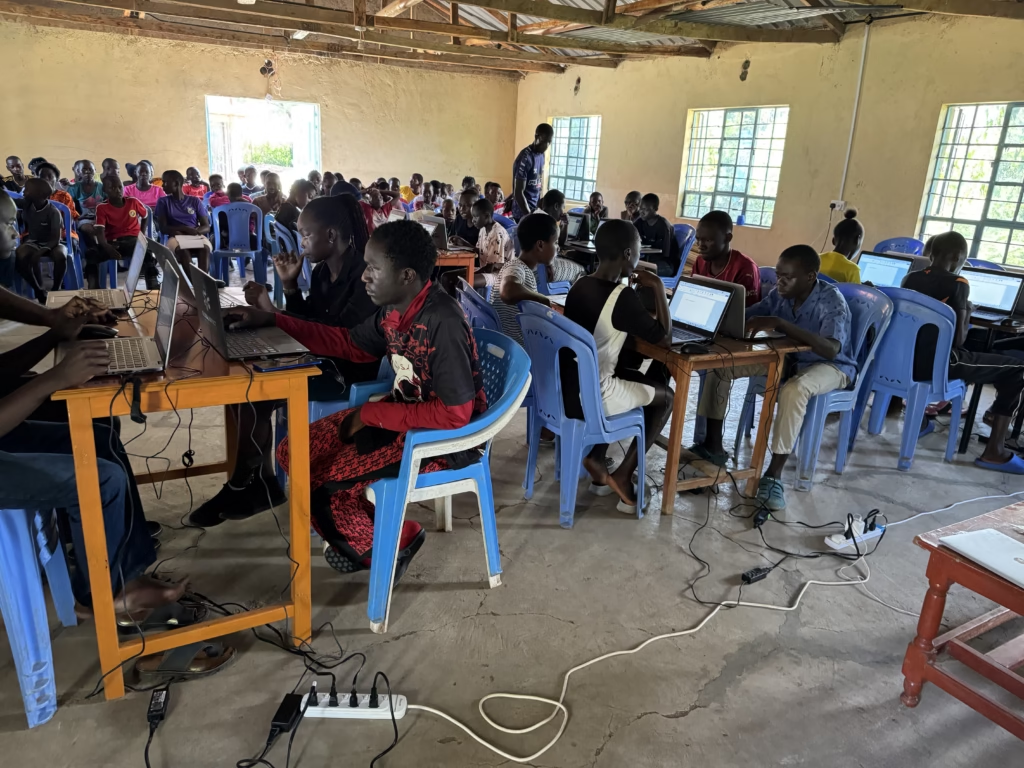
On the morning of November 6, 2025, a modest church hall in Kendu Bay stirred with new energy. Plastic chairs scraped across the floor as they were rearranged into rows. Extension cables stretched from wall to wall. One by one, twenty laptops emerged from their boxes, lids lifted carefully, and screens glowed to life.
For many in that room—teenagers, young adults, parents, shopkeepers, and farmers—it was the first time their hands had ever touched a computer. They had seen phones and digital tools from a distance, but rarely as something they could sit down and use themselves.
There was no ribbon-cutting or formal ceremony. The importance of the day showed itself in quieter ways: in the way people leaned forward, asked careful questions, and hesitated before clicking a mouse for the first time.
That morning marked the opening of the Global Impact Innovators (GII) Technology & Entrepreneurship Hub in Kendu Bay. Hosted in partnership with St. Immaculate Conception Catholic Church and made possible through the openness of Reverend Father Anthony Ngala, the hall became more than a borrowed space. It became a place where people could begin learning skills they had long been excluded from.
People arrived from different starting points, but in that room, they found a shared place to begin.
Step Inside the Hub
If you walk into the Hub today, you can still feel that early mix of curiosity and determination.
First Days at the GII Kendu Bay Hub
Who Walked Through the Door
The Hub did not launch with billboards or social media campaigns. News spread the way it often does in close communities—through conversation.
Someone heard about it during a church announcement.
Others learned about it after mosque prayers.
A neighbor told a friend.
A student told a sibling.
Soon, learners began arriving from Maguti, Konyango, Seka, Kotieno, Oriang, Nyahera Gendia and surrounding villages. Some walked nearly an hour each way. Others came by motorbike when they could afford the fare. Many said the same thing: they did not want to miss their chance.
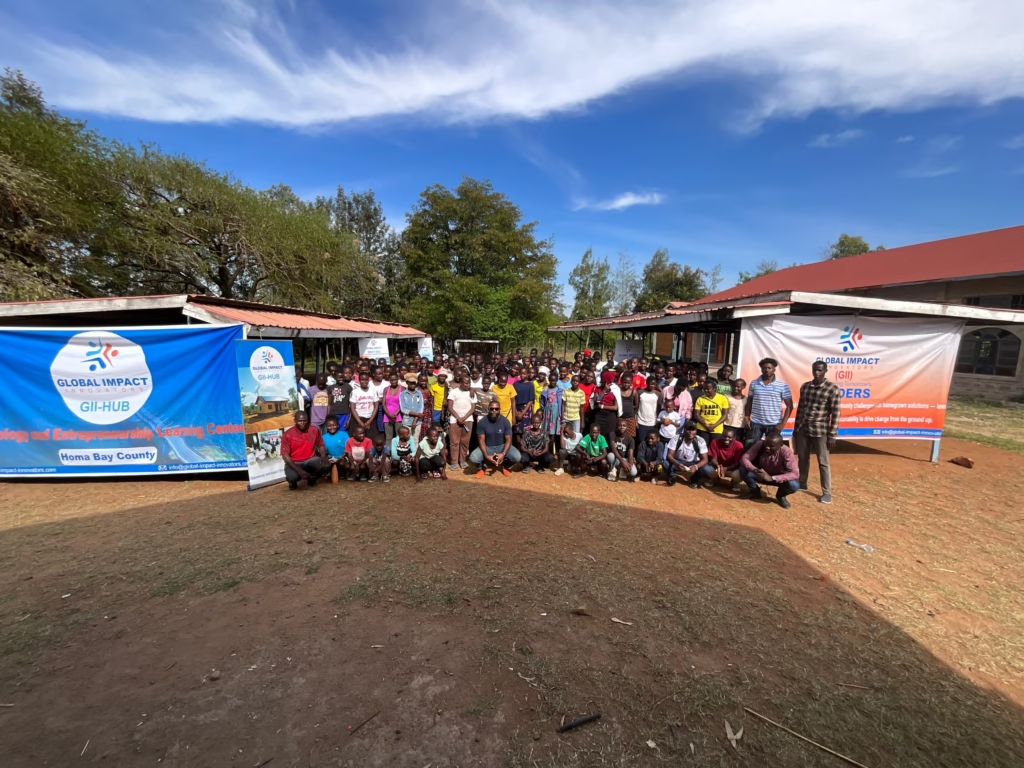
By the end of the first month, 254 learners were attending, ranging from 12 years old to adults over 50. Every learner started with zero prior computer experience. Some had gone through school without ever touching a keyboard. Others had left education long ago believing technology belonged to cities, offices, or wealthier households.
In Kendu Bay, they discovered it could belong to them too.
Women and girls now make up 57% of learners, reflecting both demand and the trust built within the community.
A Classroom That Mirrors the Community
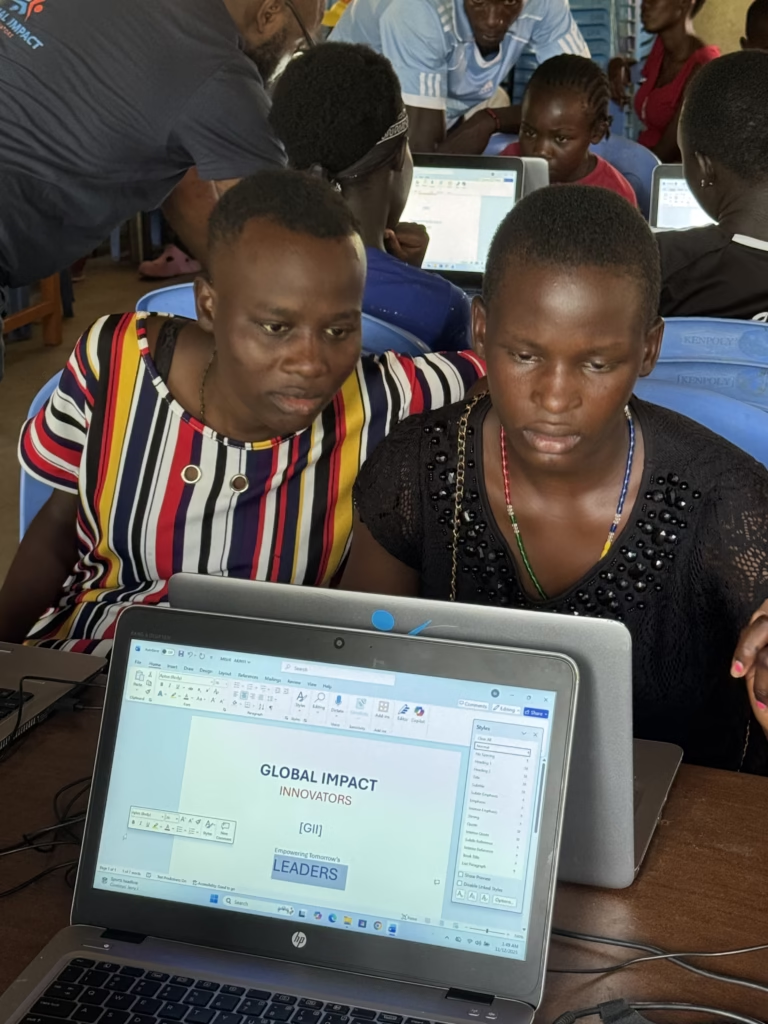
The Hub reflects the community around it. Muslim and Christian learners share tables in a Catholic church hall without tension. Teenagers sit beside adults old enough to be their parents. A younger learner might quietly guide an older one through a double-click or help locate a file.
Each morning, a group of Muslim teenage girls arrives early. When it is time for prayers, they step out to a nearby mosque and later return, determined not to miss the lesson. Instruction moves between English and Swahili so that understanding comes first and confidence follows.
In this room, faith is not a dividing line. It is simply part of people’s lives.
Learning That Turns Into Confidence
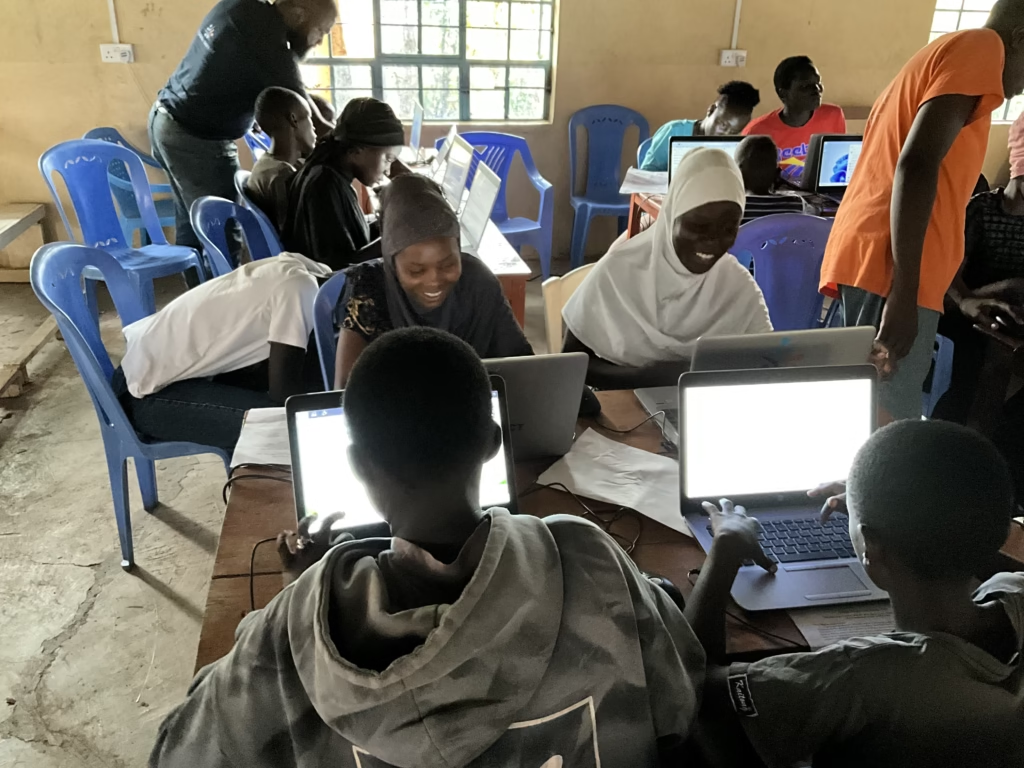
At first, many learners hold the mouse gently, as if it might break. They type slowly, looking down at the keyboard. They ask for reassurance before clicking anything.
Over time, the hesitation fades. Learners begin opening documents, writing letters, tracking small business records, and preparing simple presentations. They use digital tools for schoolwork, shop inventories, and communication with family.
You can see the change. Learners sit straighter. Their voices grow more certain. Questions shift from “Is this correct?” to “What happens if I try this?”
The computer stops feeling foreign and starts feeling useful.
What learners are gaining is not only familiarity with computers, but a foundation for future technologies. As artificial intelligence becomes part of how people learn, farm, run businesses, and communicate, even basic digital confidence becomes the first step toward understanding and using AI tools responsibly. For many here, these early lessons are laying the groundwork for engaging with a world where AI is part of everyday life.
A Story That Stays With You
One learner many remember is Mariam.
Mariam Muhammed is a teenage mother with a two-year-old son. Her mornings are full of responsibilities—caring for her child, helping at home, planning her day. By the time she reaches the Hub, lessons have often started.
Still, she comes whenever she can. And she has never been made to feel late.
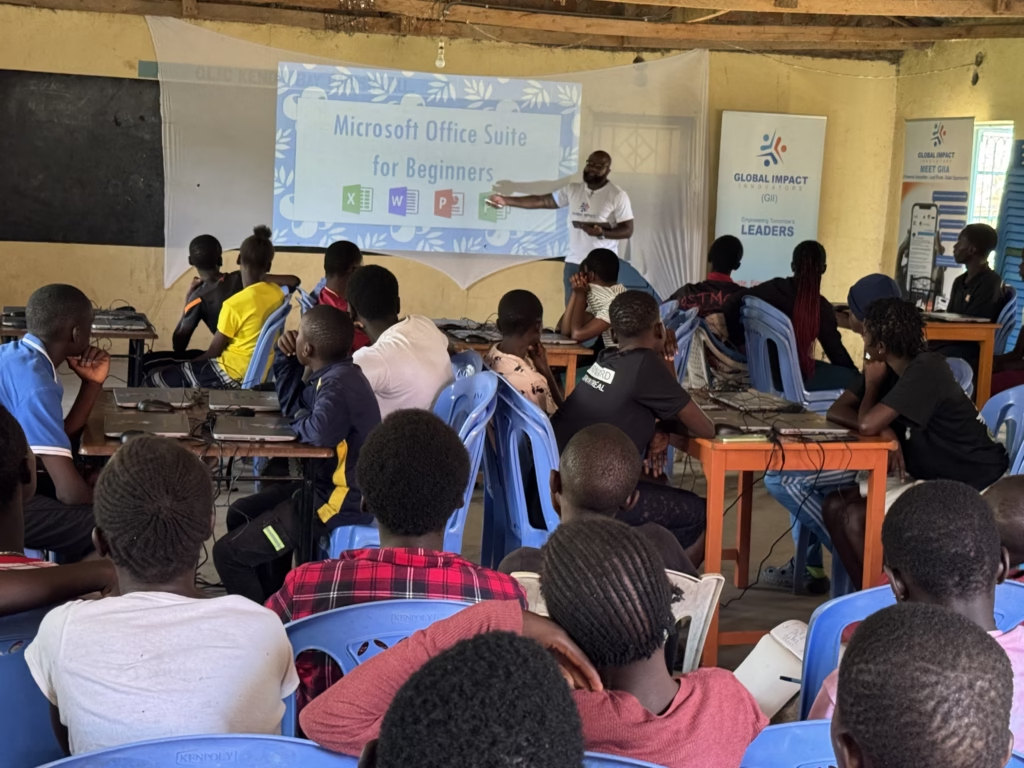
Her classmates help her catch up. One explains how to open a file. Another shows her formatting. Someone else repeats what the instructor covered earlier. They strengthen their own understanding by helping her learn.
They do not see her as behind. They see her as part of the group.
Mariam’s presence challenges the assumption that motherhood closes doors. For her, it has strengthened motivation. She often speaks about building a better future for her son and setting an example through her own learning.
Why Kendu Bay Matters — In Context
Kendu Bay’s story reflects a broader reality across Africa. The continent is home to the world’s youngest population. Around 70% of people in sub-Saharan Africa are under the age of 30 (United Nations, 2023). This youth population represents enormous potential if supported with relevant skills.
Africa’s working-age population is also expanding rapidly and is projected to exceed 1 billion in the coming years, making it one of the largest in the world (World Bank, 2023). At the same time, the African Union reports over 400 million young people aged 15–35 across the continent (African Union, 2022).
This demographic shift is often called a “youth dividend,” but it only becomes a dividend if young people have access to education and skills aligned with modern economies.
Digital and AI-related skills are increasingly part of that picture. The World Bank notes that digital competencies are becoming essential for participation in today’s economy, from entrepreneurship to service delivery and communication (World Bank, 2023). As AI tools spread globally, the gap between those who can use technology and those who cannot risks widening.
In that context, access to foundational digital skills is not a luxury. It is preparation for participation in the future workforce.
What is happening in Kendu Bay is one small but concrete step toward closing that gap.
A Vision Bigger Than One Hub
The Hub in Kendu Bay is not an endpoint. It is a model of what can happen when access, trust, and local partnerships come together. What began in one church hall with twenty laptops shows how community-based learning spaces can help people gain confidence and skills without leaving their villages.
Looking Ahead
As more learners join, GII plans to expand into:
- Entrepreneurship and small-business skills
- Digital-economy readiness
- Mentorship and career pathways
- Advanced digital skills
- Practical AI literacy and applied AI skills
AI exposure will focus on real-life applications—how AI supports education, agriculture, communication, and business decision-making. The aim is not to create engineers overnight, but to ensure rural learners are not excluded from a world where AI increasingly shapes everyday work.
Because digital literacy is not the destination. It is the doorway into opportunity.
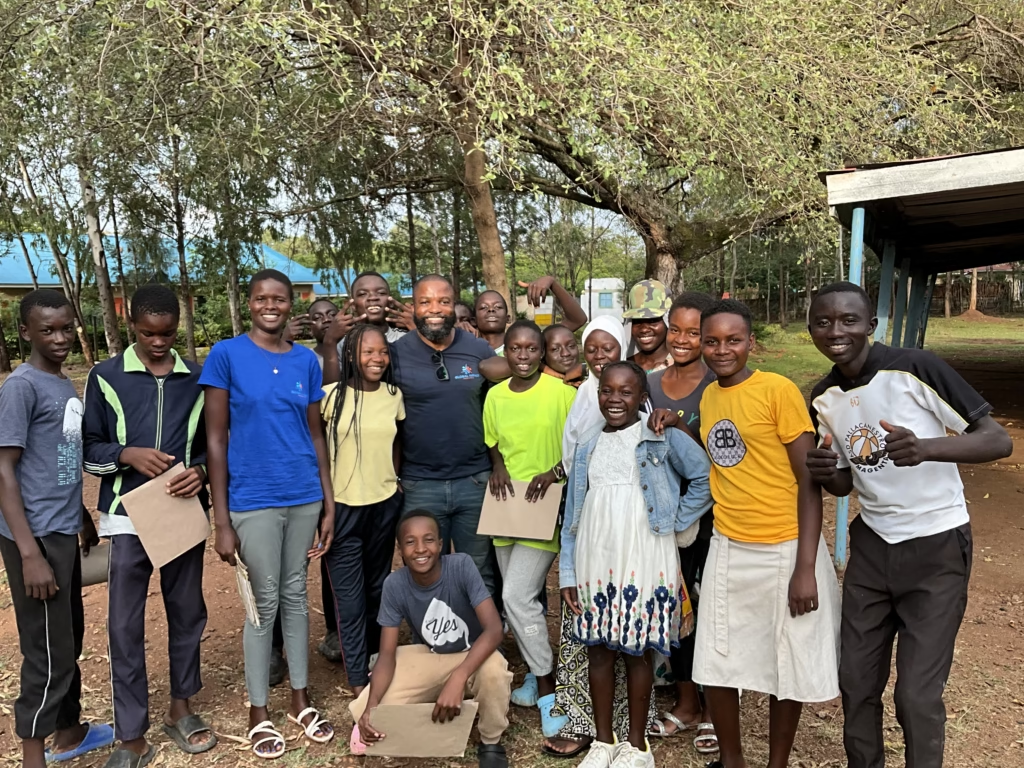
A Simple Truth Emerged in Kendu Bay
A church opened its doors.
Neighbors learned side by side.
A young mother continued her education.
Adults returned to the classroom.
Children helped their elders.
Twenty shared laptops became tools for participation in a digital world.
Progress in Kendu Bay has been steady rather than dramatic, but it is real. Each lesson builds confidence. Each new skill opens another possibility.
See the Impact. Be Part of It
You don’t have to be in Kendu Bay to stand with Kendu Bay.
Share this story
Support GII’s work
Donate devices
Help bring a Hub to another community
Opportunity becomes real when it becomes local. In Kendu Bay, that future has already begun.