Reflections from the Microsoft Global Nonprofit Leadership Summit
March 24–26 | Bellevue, Washington
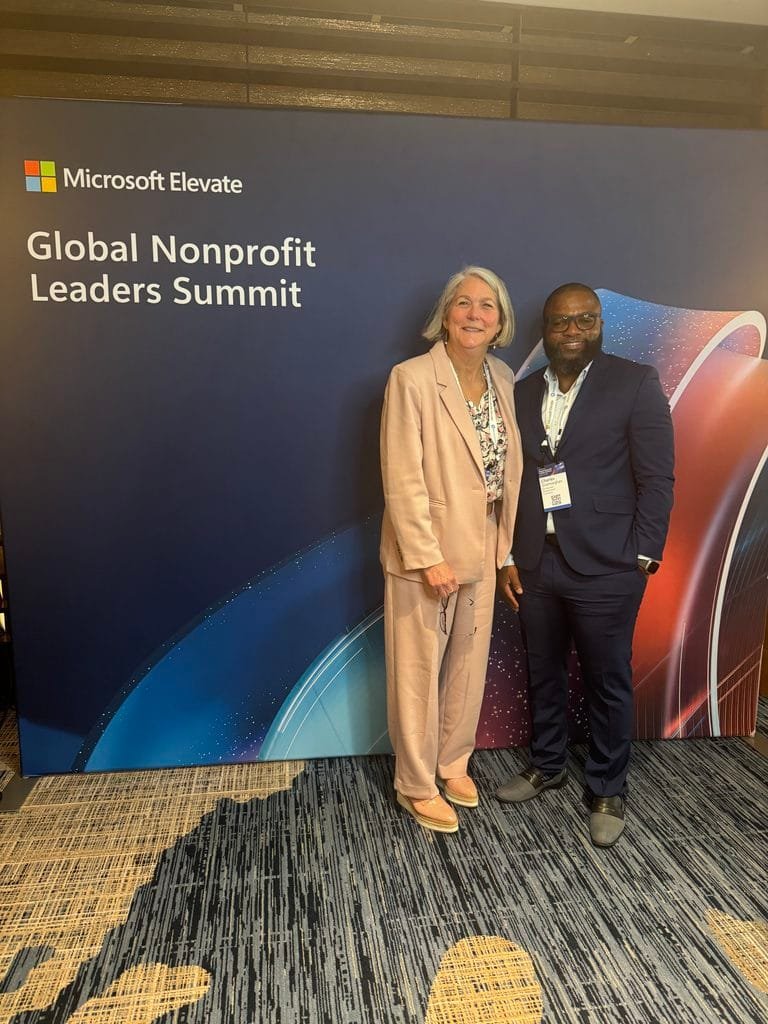
Last week, our leadership team at Global Impact Innovators (GII)—including Karon Weber and myself—attended Microsoft’s Global Nonprofit Leadership Summit in Bellevue, Washington.
For us, this was more than a convening. It was a moment of alignment.
Over three days, we joined nonprofit leaders, technologists, funders, and system builders from across the globe working at the intersection of innovation, equity, and impact. What stood out was not how futuristic the conversations sounded, but how closely they reflected the realities we encounter every day in rural and underserved communities across Africa.
This was not a conversation about the distant future.
It was a confirmation that the future is already being built—and that last mile communities must be part of it.
Where Ground Reality Meets Global Leadership
One of the most meaningful moments of the summit for the GII leadership team was engaging directly with the Microsoft Elevate Global Leadership Team, including a focused and genuinely productive conversation with Harp Girn.
We appreciated not only the time extended by the Elevate team, but the depth and quality of the engagement. The discussion moved quickly beyond high level frameworks into a grounded exchange on what digital inclusion actually looks like in practice—particularly in rural and underserved communities where constraints are real and persistent.
We shared what digital inclusion means beyond infrastructure maps and policy intentions—what it looks like to operate in environments where:
- Connectivity is inconsistent
- Access to devices is limited
- Digital literacy often starts at zero
In response, the Elevate team engaged with openness and seriousness, creating space for honest dialogue about what it takes to translate global commitments into locally viable solutions.
We discussed how GII hubs are intentionally designed for these realities, not ideal conditions:
- Offline first learning and data models
- Solar powered infrastructure where electricity is unreliable
- Starlink enabled connectivity for truly last mile regions
- A structured ICT curriculum aligned with UNESCO, ISTE, and EU DigComp frameworks
At GII, we are not just delivering training. We are building pathways into the digital economy, starting from foundational ICT skills and moving through productivity tools, entrepreneurship, and early exposure to AI.
What made this engagement particularly impactful was that it wasn’t theoretical—it was operationally grounded. There was shared recognition that technology only delivers value when it is shaped by local context, implemented with intention, and reinforced through sustained partnership.
We are also especially grateful to Wanjiku Jean Munyaka for convening a roundtable dinner with the Microsoft Elevate Global Leadership Team. That setting fostered the kind of open, generative dialogue the sector needs more of—where global strategy meets local execution, and listening is treated as seriously as ambition.
Naming the AI Divide—and Responding with Structure
The summit opened with a compelling kickoff session led by Brad Smith President and Vice Chair of Microsoft. He introduced new data highlighting a widening AI divide between the Global North and Global South.
This is not simply a technology gap.
It is an opportunity gap—one that threatens to exclude entire regions from the economic and societal benefits of AI if left unaddressed.
Microsoft’s response—a $5 billion investment commitment—paired with a structured framework to
support AI diffusion across the Global South through five interconnected pillars:
- Infrastructure – Expanding connectivity and cloud access
- Technology and Skills for Schools – Preparing educators and learners for an AI-enabled future
- Multilingual AI Capabilities – Building inclusive, language-aware AI systems
- Local Innovation for Local Needs – Supporting community-led, context-specific solutions
- Better Measurement and Policy – Strengthening data, evaluation, and governance frameworks
From GII’s perspective, this framework mirrors what we are building on the ground.
From GII’s perspective, this framing resonated. AI diffusion cannot be treated as inevitable or neutral; it
needs intentional leadership and investment focused on equity.
You cannot meaningfully introduce AI into communities that:
- Lack reliable power
- Do not have access to devices
- Have never used basic productivity tools
- Operate outside formal digital systems
That is why our work starts earlier—building the foundation before introducing the future and doing so in ways that are locally relevant and sustainable.
Data, Capacity, and Responsible AI
Throughout the summit, many sessions focused on data readiness, governance, and resilience—not AI hype, but the foundational work nonprofits need to do before scaling advanced tools.
Across sessions, leaders explored:
- What it takes to build trustworthy data systems
- How nonprofits can strengthen data governance and cybersecurity
- Ways to design tools that work in low-resource, low-connectivity environments
- How to move from insights to action without losing community trust
These conversations closely reflected GII’s experience. In many of the communities we work with, the biggest barrier is not ambition—it is access, infrastructure, and practical usability. Data and AI only create value when they are aligned with local capacity and lived realities.
Microsoft Elevate for Changemakers: A Critical Inflection Point
One of the most significant announcements of the summit was the launch of Microsoft Elevate for Changemakers.
This signals a shift in how technology providers engage with the nonprofit sector—not just as beneficiaries of funding, but as long term partners and infrastructure for global innovation.
This matters deeply for organizations like GII because we are not only program implementers. We function as:
- Access providers for underserved communities
- Talent pipeline builders for the digital economy
- Data generators in emerging markets where credible longitudinal data is scarce
By strengthening nonprofit capacity, initiatives like Elevate for Changemakers help ensure that innovation is not centralized—but distributed.
Data as Infrastructure, Not Afterthought
Across multiple sessions, a consistent theme emerged: Data is now infrastructure.
The conversation has moved beyond counting activities to measuring change over time. Leaders across the summit emphasized the shift from asking:
How many people did you reach?
to
What changed—and can you prove it over time?
Sessions focused on:
- Designing data systems that work in low connectivity environments
- Building longitudinal datasets that track outcomes, not just outputs
- Moving from training metrics to indicators like employment, income, and mobility
- Aligning nonprofit data with global standards and funder expectations
This strongly reinforces the direction of the GII Data Intelligence Platform.
Our hubs function as local data collection points. Learner journeys are tracked longitudinally—skills gained, outcomes achieved, and economic mobility over time. Data is standardized across countries, allowing insights to inform program design, policy dialogue, and investment decisions.
In this way, the GII network has the potential to serve as a living research infrastructure for understanding digital transformation in developing economies.
Day Two Closing Plenary: Asking Better Questions
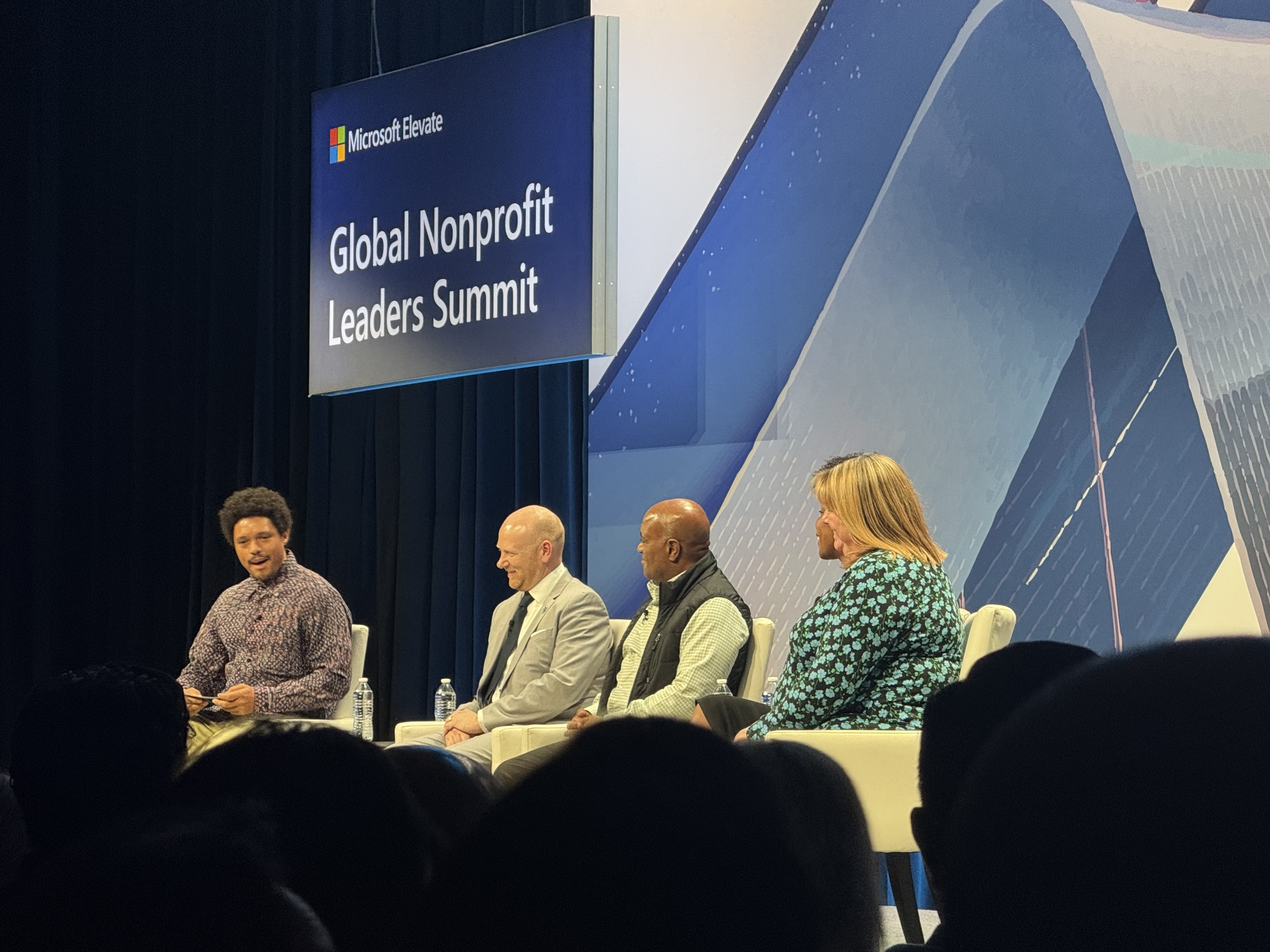
Day two concluded with a thoughtful Closing Plenary, moderated by Trevor Noah in his role as Microsoft Elevates Chief Questions Officer.
Rather than offering easy answers, the session created space for reflection. Leaders from Microsoft Elevate, St John Ambulance, Teach For America, Make A Wish America, and the Canadian Centre for Nonprofit Digital Resilience discussed what’s next for the nonprofit sector.
With humor, curiosity, and a global lens, Trevor emphasized the importance of asking better questions about AI, innovation, and whose interests are prioritized as technology scales.
The session reminded us that leadership in this moment requires both imagination and responsibility.

Investing Where It Matters Most: Women and Girls
A powerful closing reflection came from Melinda French Gates who emphasized prioritizing programs intentionally designed for young girls and women.
Today, 59% of learners across GII hubs are female—a data point we track deliberately because inclusion must be measurable. But participation alone is not the goal.
Through GII’s entrepreneurship and workforce readiness programs, we prioritize equipping women with:
- Practical business and digital skills
- Exposure to productivity and financial tools
- Startup grants and structured support to launch or scale income generating ventures
The objective is economic agency and long-term self-sustainability—ensuring women are positioned not only to participate, but to build, lead, and employ within their communities.
Melinda’s message reinforced a conviction we already hold:
Digital inclusion without gender equity is incomplete.
Excluding Africa’s Rural Communities from the Digital and AI Economy Is Not an Option
Africa’s digital and AI inclusion is not a regional development issue—it is a determinant of the future global economy, particularly as the center of global labor growth and market expansion shifts south. The World Bank projects that Africa will have the largest working-age population of any region by the mid-2030s, while many advanced economies face shrinking labor forces due to aging populations (World Bank, 2023; UN DESA, 2024).
This demographic shift means the global economy will increasingly rely on Africa—not just as a source of labor, but as a source of digitally capable and AI-ready talent. Yet access and skills remain uneven, with rural and underserved communities facing the greatest exclusion. The OECD warns that without broad investment in digital and AI skills, labor shortages in healthcare, technology, logistics, education, and digital services will intensify globally, constraining productivity and long-term growth (OECD, 2024).
From a competitiveness standpoint, the stakes are equally high. The World Bank estimates that by 2030 more than 230 million jobs in Sub-Saharan Africa will require digital skills, yet millions of young people—especially in rural areas—still lack exposure to basic ICT tools (World Bank, 2023). In an AI-driven economy, productivity gains accrue where skills exist; when populations are excluded from skills formation, global productivity growth narrows rather than expands (World Bank, 2025).
Africa’s rural and underserved communities also represent one of the most significant future markets. The United Nations Conference on Trade and Development (UNCTAD) projects AI to become a $4.8 trillion global market by 2033, but cautions that without deliberate inclusion, most of this value will concentrate in a small number of economies (UNCTAD, 2025). Exclusion constrains demand, weakens network effects, and limits the long-term returns on global innovation.
The United Nations Development Programme (UNDP) further warns that unmanaged AI expansion could trigger a renewed era of global divergence, reversing decades of progress in narrowing income, skills, and opportunity gaps (UNDP, 2025). Excluding Africa’s rural communities would deepen inequality, disrupt labor markets, and weaken the resilience of global supply chains and digital systems.
Addressing Africa’s longstanding digital divide alongside the emerging AI divide is a decisive lever for strengthening the global workforce, unlocking future markets, sustaining innovation pipelines, and securing long-term economic stability worldwide.
This is why investment in foundational access, inclusive skills development, gender-intentional participation, data readiness, and responsible AI adoption at the last mile matters far beyond Africa’s borders. Ensuring rural and underserved communities can participate meaningfully in the digital and AI era is not simply an African priority—it is a global economic necessity.

What This Means for GII—and What Comes Next
As we left the summit, the GII leadership team felt both validation and resolve. Not because the work is complete—but because the global conversation is finally converging with last-mile realities.
What we see every day:
- Last-mile access remains the bottleneck
- Skills unlock economic participation
- AI equity depends on foundational inclusion
- Gender-intentional design determines who benefits
- Data defines credibility, scale, and influence
At GII, we are building across all of these layers:
- Infrastructure → solar – powered, connected hubs
- Skills → structured ICT and entrepreneurship pathways
- Access → inclusive programs with strong female participation
- Capital → entrepreneurship grants prioritizing women
- Data → longitudinal systems tracking real outcomes
- Scale → a model designed to reach thousands of communities
Through our broader vision—including the development of GII’s mentorship and learning platform—we are working toward something larger:
Appreciation and Looking Ahead
We extend our sincere appreciation to the Microsoft Elevate team for the openness, rigor, and practicality they brought to every engagement throughout the summit. The sessions were not only thoughtful—they were productive, grounded, and focused on execution, with genuine attention to last mile realities.
We are also grateful to the many partners, nonprofit leaders, technologists, and funders we connected with. These conversations reinforced a shared understanding: closing the digital and AI divide will require sustained collaboration across sectors and geographies.
Global Impact Innovators (GII) looks forward to continued collaboration with Microsoft Elevate and partners across the ecosystem as we work together to ensure the future being built is one that truly includes everyone